
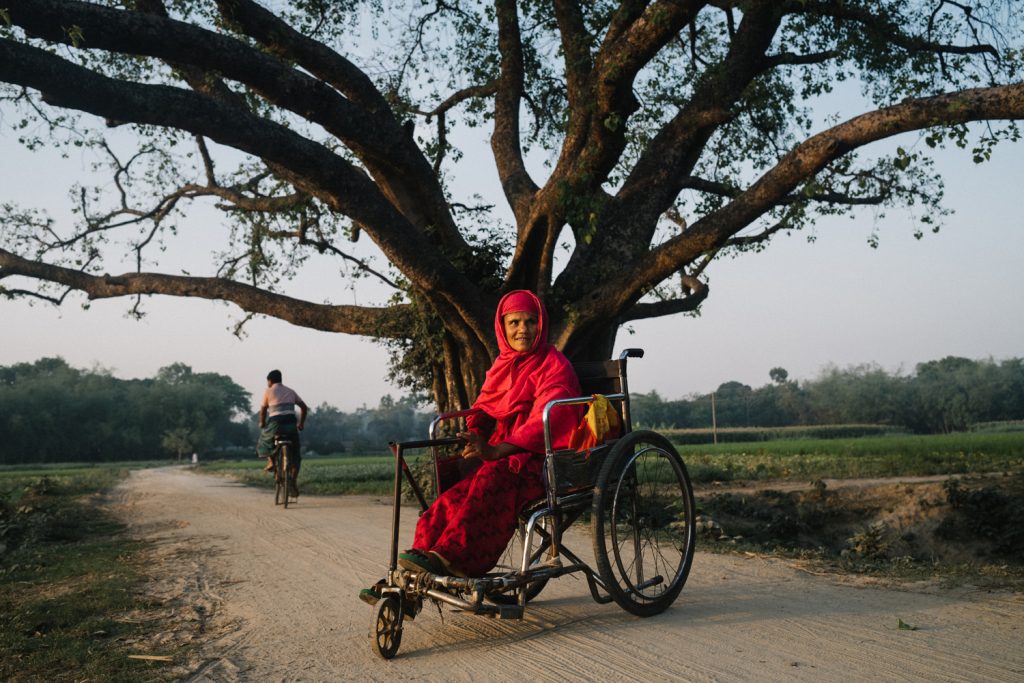
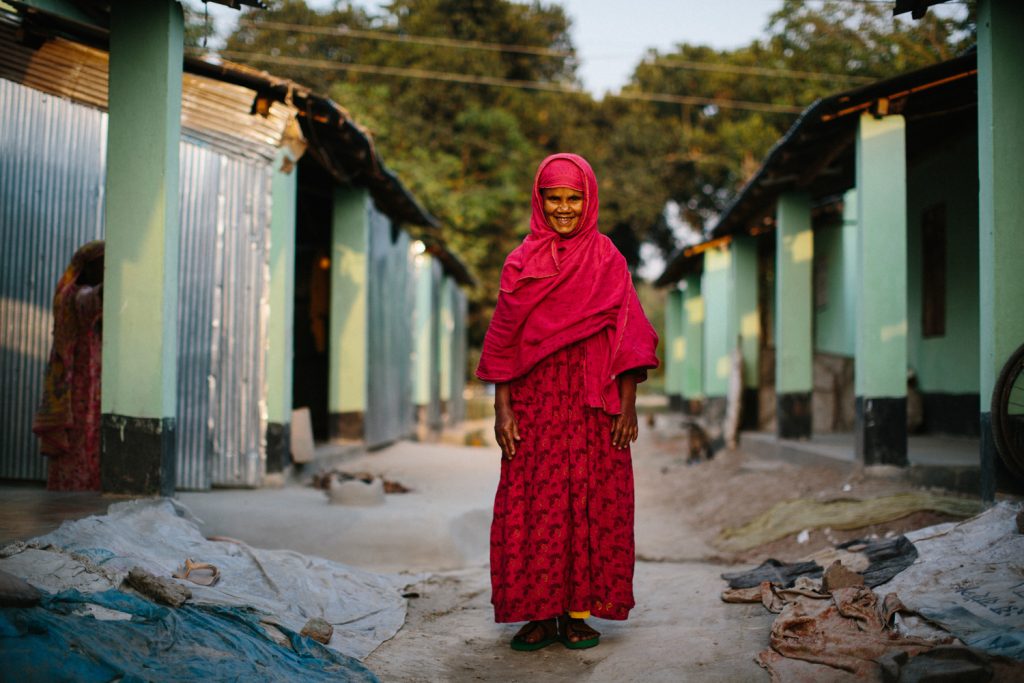
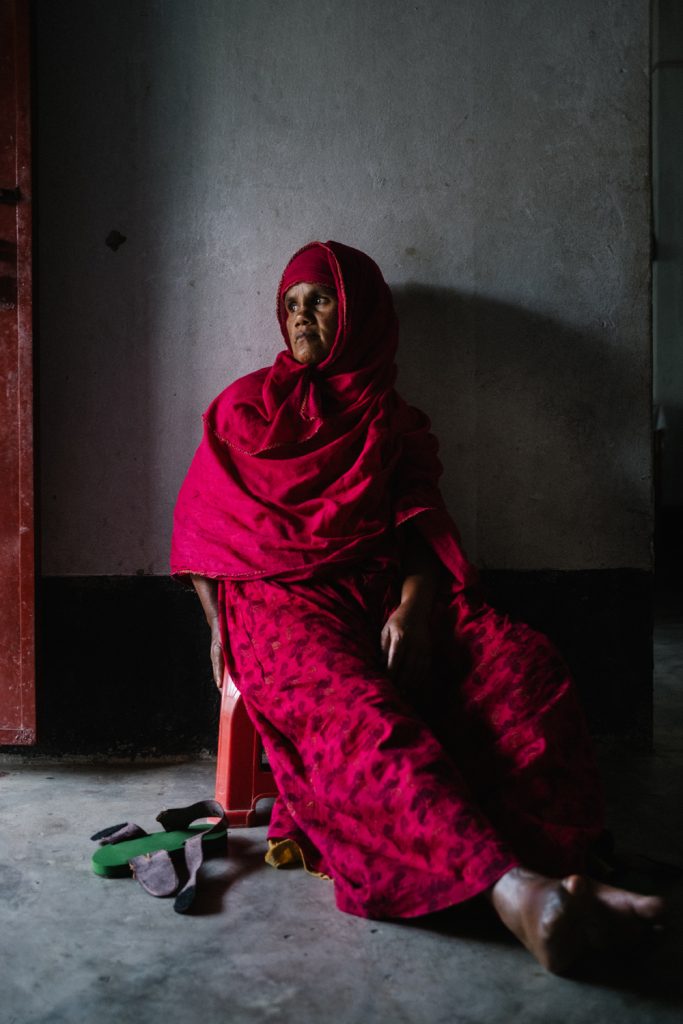
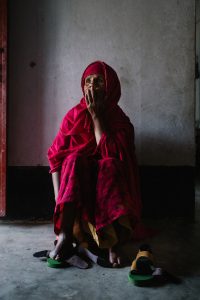
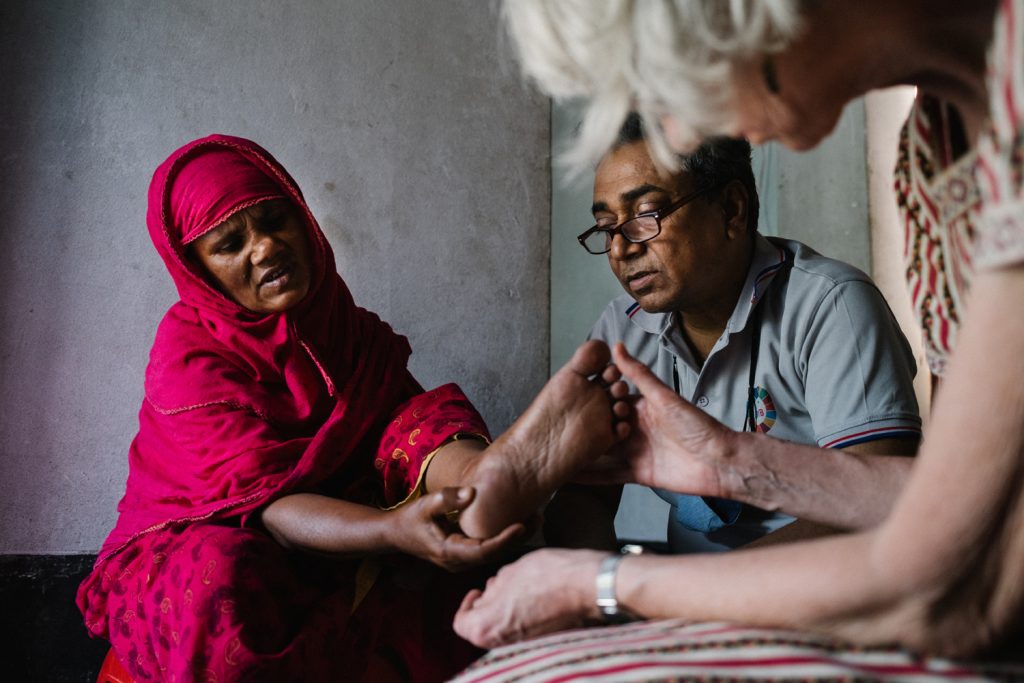
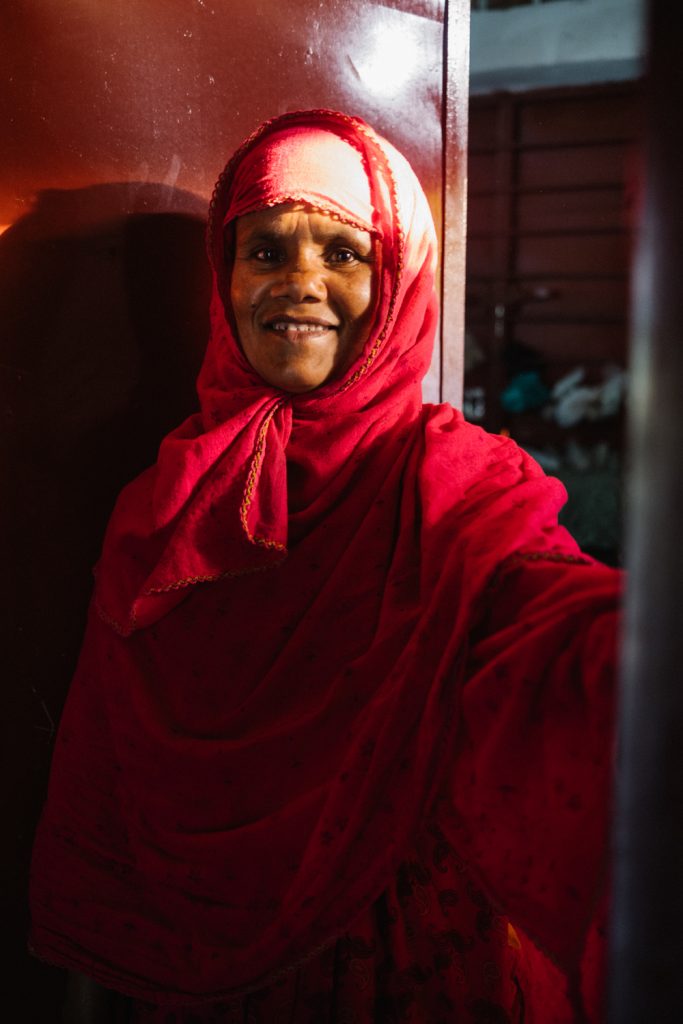
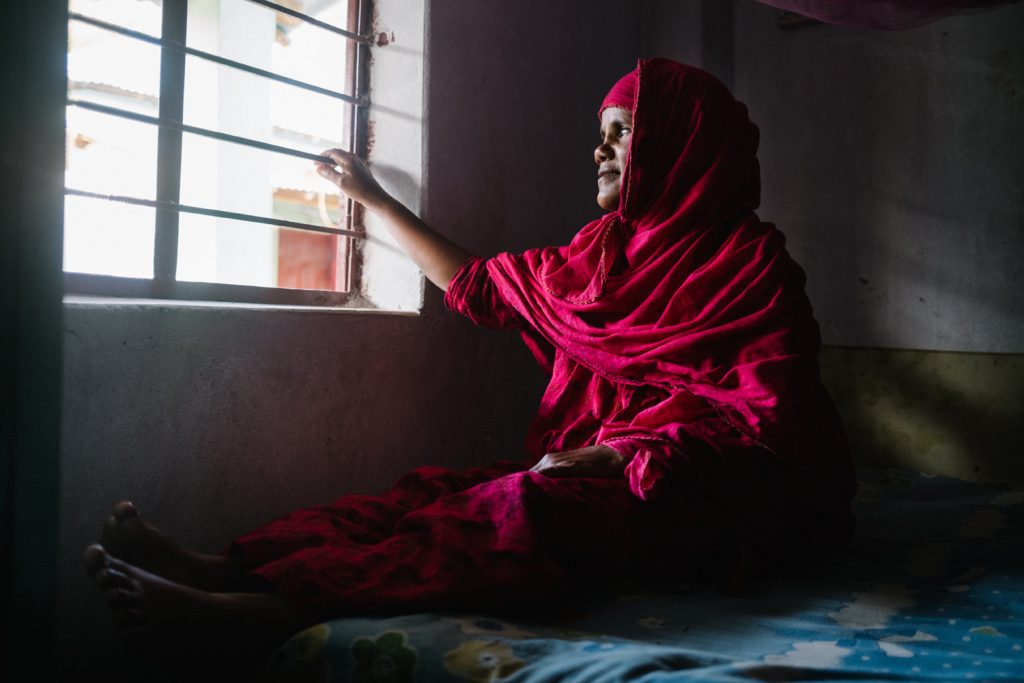
Bilkis Begum is 60 and lives in a new house provided by the government for people with disabilities. She has 3 daughters and a son. Her husband died when her younger daughter was 1 year old. After the delivery of her last child she developed skin patches. The doctor checking her recognised leprosy and sent her to receive treatment. However she was alone and could not attend the clinic until her daughter was 4 years oin 2012. She took treatment for 6 months and then 12 months. 6. Her original skin patched improved but some new ones appeared. Her legs are weak and anaesthetic. Her left hand is also anaesthetic. She does daily self-care of her hands and feet. She moved into her government house 10 months ago, she had been renting in the slum before that.
Her husband supported her with her disease. But after his death her children left her. Her new neighbours treat her well. The biggest challenge for her is to earn enough by begging.
“Leprosy patients have knowledge about the disease and should be listened to even when they are lower status like herself. The health authorities should take this disease seriously instead of ignoring it.”
. 

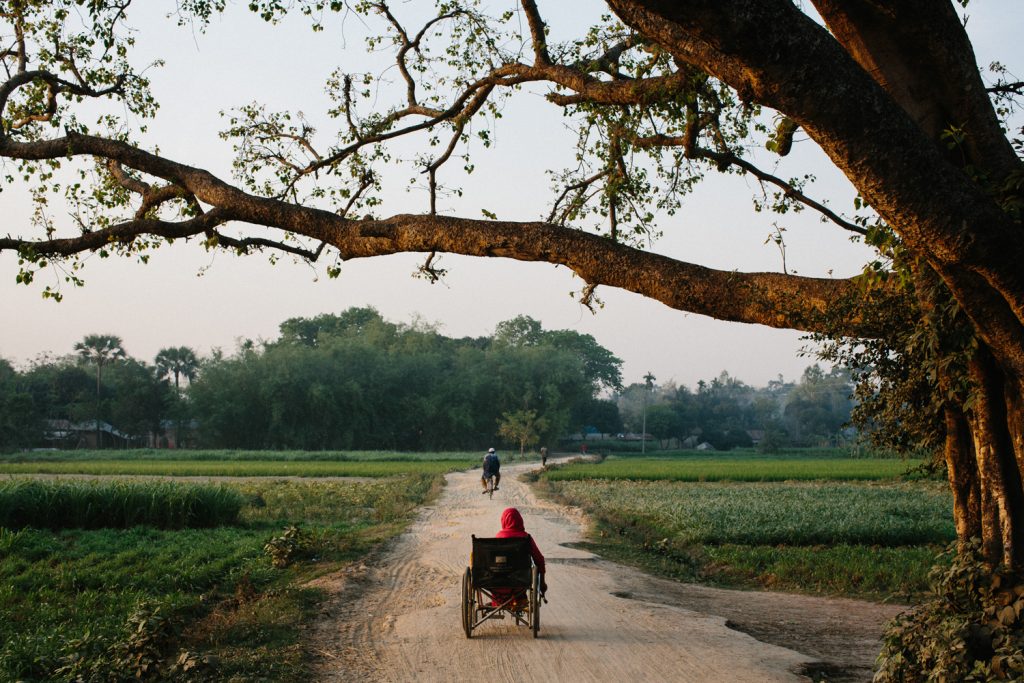
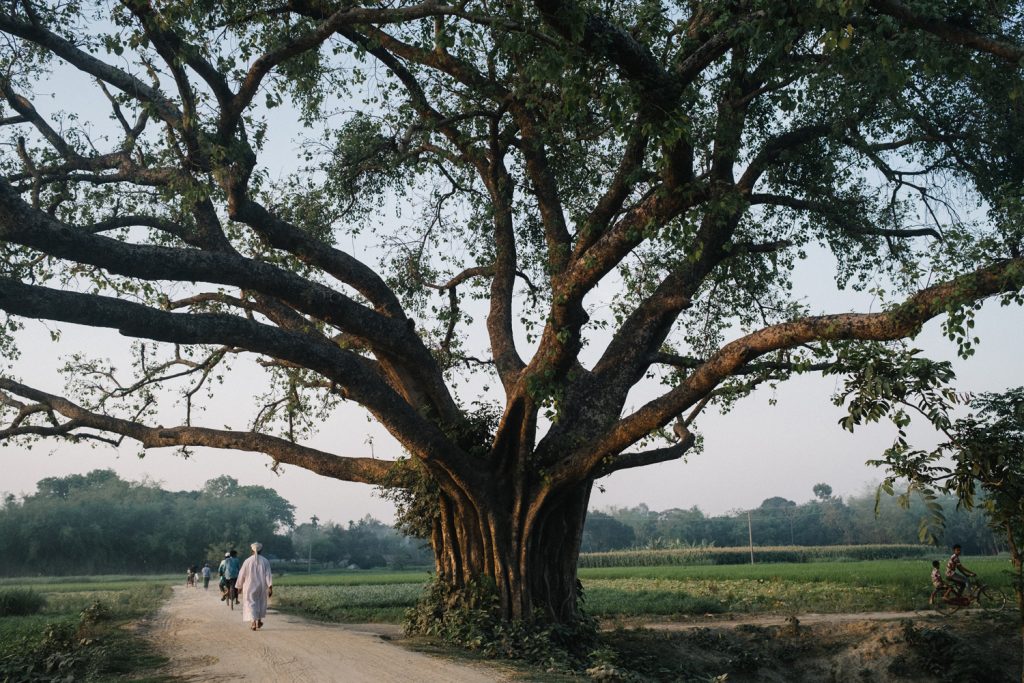
Photography by Tom Bradley, writing by Prof Diana Lockwood